
How Arrest Warrants Work in Anderson County
An arrest warrant is a court order that lets an officer bring someone before a judge. Texas law starts with a sworn complaint or affidavit. A magistrate reviews it for probable cause. A later arrest order may instead follow a missed setting or another court event, so the case posture counts. Anderson County has four District Courts. It adds a County Court at Law, four JP precinct courts, and municipal courts in Palestine, Elkhart, and Frankston. The issuing court and case type decide which clerk keeps the file.
Anderson County Arrest Warrants Follow Probable-Cause Review
Texas Code of Criminal Procedure Chapter 15 supplies the framework for arrests under warrant, and the current Texas Code of Criminal Procedure, Chapter 15 text is posted online. A magistrate weighs the legal basis presented. Later, a capias or FTA warrant can issue once a case is open and a required appearance has been missed. Those are separate events, not one step repeated. Felony files run through the Anderson County District Clerk, whose criminal deputies route the case record. Anderson County Court at Law keeps its own assigned matters. Depending on jurisdiction, the Anderson County Clerk or the District Clerk supports those records. A clerk can locate the file. The judge still controls any recall, bond decision, or setting.
Arrest Warrants: What They Contain
A released warrant or case record may list a court, cause number, process type, date, charge category, and bond information. Anderson County posts no sample warrant format. Some material stays sealed, withheld, or redacted. That covers affidavits, juvenile records, and anything tied to an active investigation.
| Issuing court | Identifies the judge or magistrate's court and the clerk to contact. |
|---|---|
| Cause number | Connects the process to a court file. |
| Warrant type | May be an initial arrest order, FTA process, or post-judgment capias. |
| Date and status | Ask whether the process is active, executed, recalled, or replaced. |
| Bond | Confirm amount and accepted release steps with the court or jail. |
Anderson County Arrest Warrants Use Several Serving Routes
Anderson County Sheriff's Civil Division lists a Warrants function at (903) 731-8243. Call that desk first. Anderson County also lists constables by precinct. Palestine says its Police Department performs law enforcement for the municipal court, arrests on city warrants, and transports prisoners to Anderson County jail; no county source pins every district or JP warrant on one serving officer. Confirm the agency on the record. Two Anderson County pages help. The District Courts page gives contacts for all four courts, and the Sheriff page separates Warrants, Records, and jail contacts.
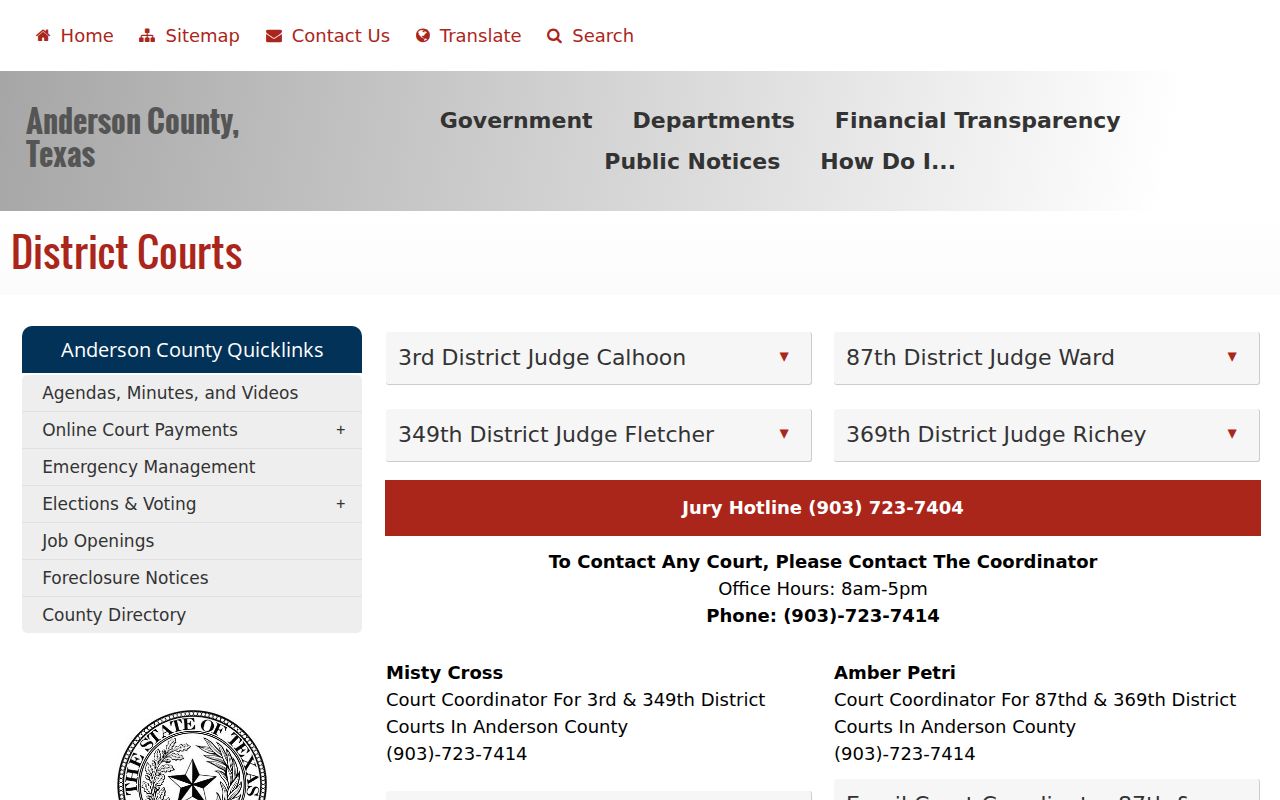
The District Courts contact panel helps identify the court coordinator for a district case.
How Warrants Get Served in Anderson County
Almost any authorized officer can serve one. The Anderson County Sheriff's Office, a constable, or city police may act, depending on the warrant's source and assignment. After an arrest, questions split. The jail explains booking and bond; the issuing court controls the case and warrant status.
Anderson County Sheriff's Civil Division, Warrants
Anderson County Courthouse, Room 12
500 N. Church Street, Palestine, TX 75801
(903) 731-8243
Send written sheriff or jail records requests to ATTN Records, 1200 E. Lacy Street, Palestine, TX 75801, or call (903) 731-8214. That line is for records, not after-hours calls. The District Clerk page gives the felony-file route.
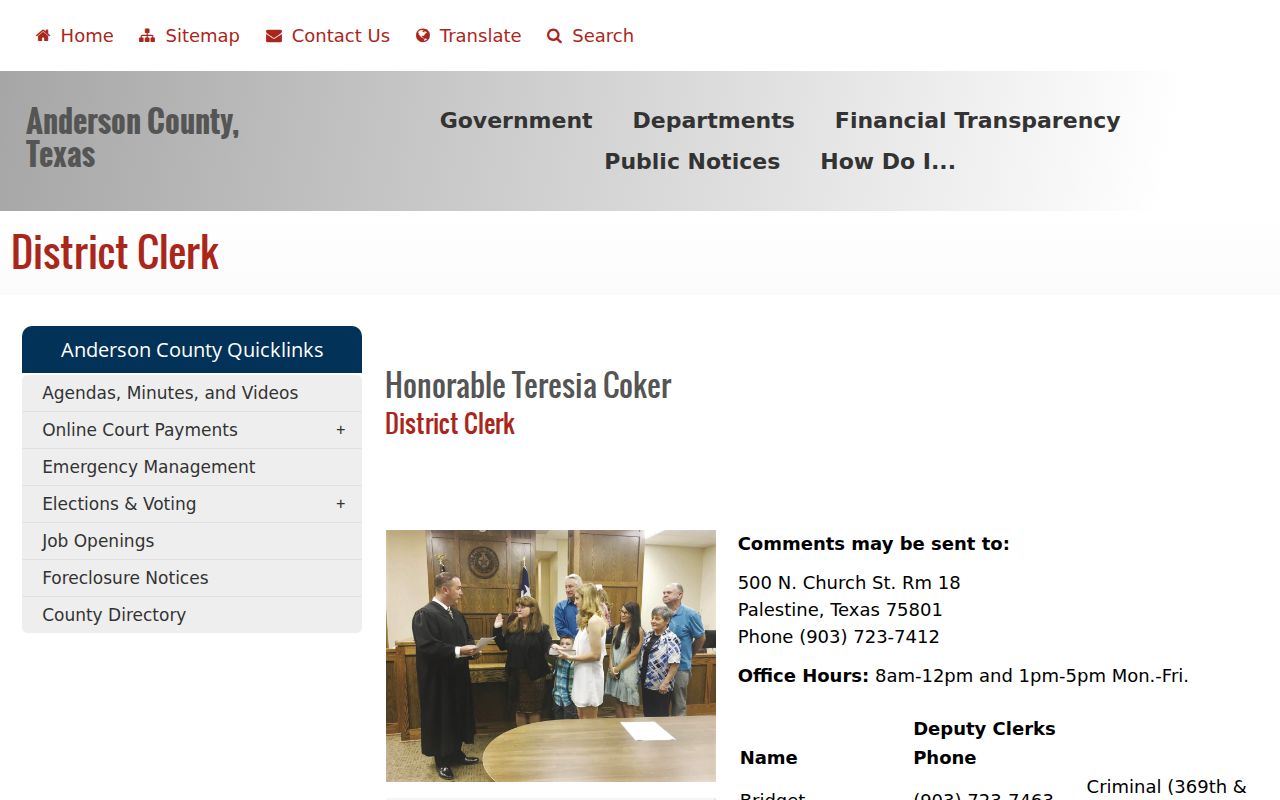
In Anderson County, the District Clerk flags new felony filings, and sheriff's deputies carry the resulting warrants out for service.
Anderson County Arrest Warrant Records by Case
The Anderson County Sheriff's Records Department takes written requests by email or letter. Name a specific existing record. A releasable warrant return or status entry fits, with the court, date range, agency, and case number attached. The Anderson County Clerk and District Clerk use separate contact forms for court material. Palestine police requests run through the city's Public Information route. Those can hit body-camera or investigation limits. Texas Government Code Chapter 552 governs access, but it allows exceptions. No agency has to create a new list or disclose a juvenile warrant, sealed affidavit, victim address, or full Social Security number. Ask the legal basis of any withholding or redaction. The District Court payment and case-search page shows the court portal route.
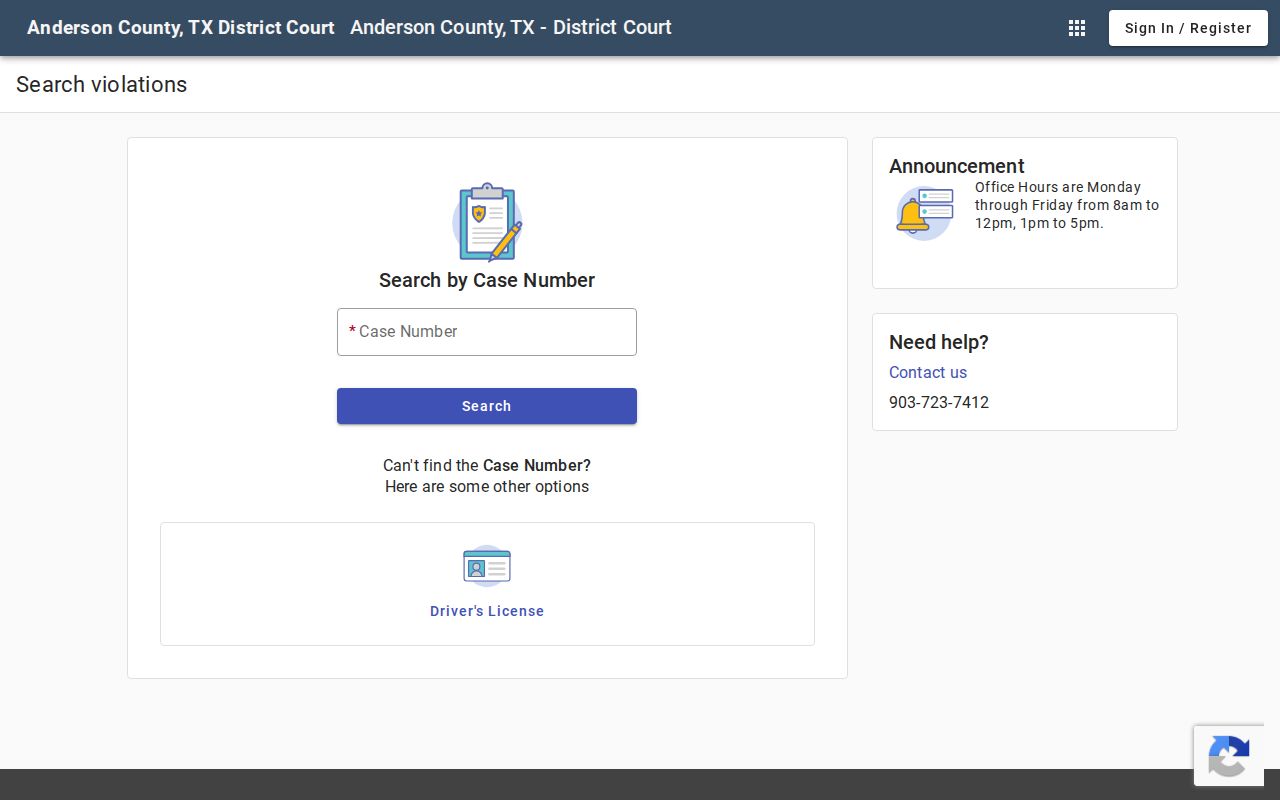
The District Court portal in Anderson County handles case lookup and payments, but it posts no warrant roster, so treat it as one lead rather than a warrant list.
Arrest Warrants, Summonses, and Bench Warrants
The words carry different commands. A summons or notice just tells you to respond or appear, while an arrest warrant in Anderson County orders an arrest after a judge reviews it. A bench or FTA warrant follows a missed court obligation. Whatever label the court used, ask the clerk what the next step is.
| Record | Purpose | Anderson County contact |
|---|---|---|
| Summons | Notice to appear or respond | Issuing court clerk |
| Arrest warrant | Authorizes arrest and presentment | Issuing court and serving agency |
| Bench/FTA warrant | Addresses a missed court duty | Court that set the case |
Anderson County Warrant Searches Exclude Federal Court
A federal warrant tied to an East Texas case stays federal, even if officers serve it inside Anderson County. Nothing about that service turns it into an Anderson County warrant. The Eastern District of Texas runs a Tyler Division at the William M. Steger Federal Building, 211 W. Ferguson Street, Tyler. The Clerk's Office there takes calls at (903) 590-1000, and the U.S. Marshals Tyler office lists (430) 205-7560. For dockets, skip the county's Tyler portal and Research Texas; federal cases live in PACER, and PACER charges fees for access. Some federal process is sealed too, so a blank public search proves nothing. The federal court's Tyler information page lists courthouse contacts, PACER's current fee page explains the costs, and the Eastern District of Texas Tyler page is the contact source.
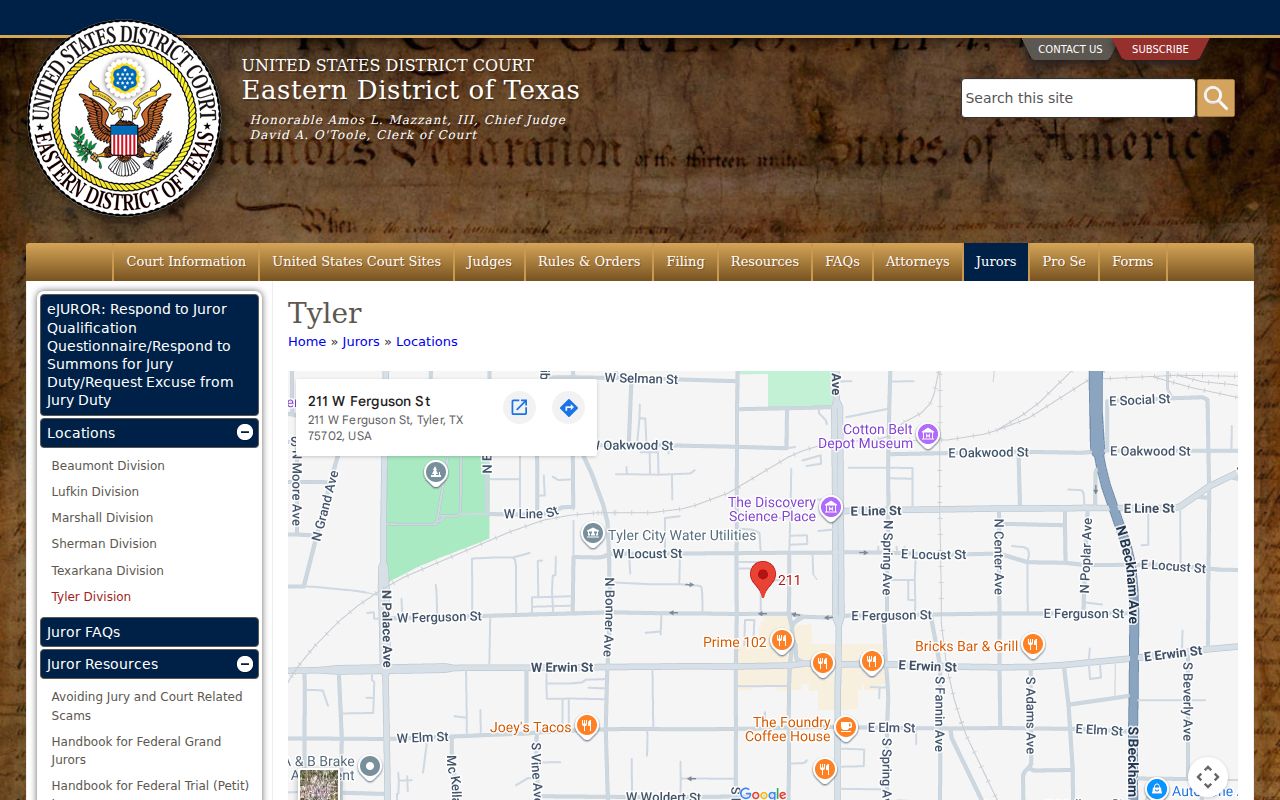
The federal courthouse stands apart from Anderson County's court system. Its records live separately too. The PACER fee page lays out what public federal docket access costs.
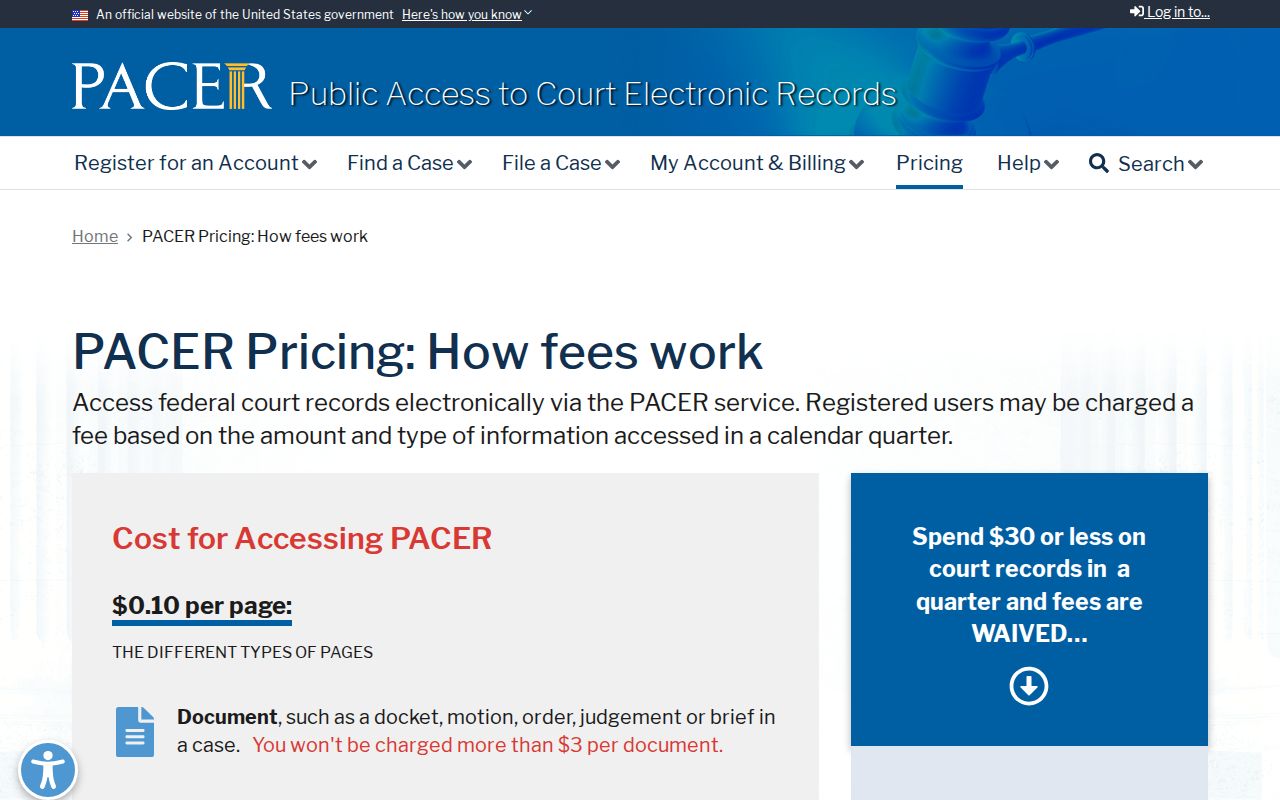
Anderson County warrant searches stop at the county line; for federal matters, PACER offers public docket access on unsealed cases, though it is no warrant database.
Handling an Arrest Warrant in Your Name
Pick up the phone before you walk in anywhere. The Anderson County Sheriff's Warrants line or the issuing clerk can tell you which court signed the warrant and whether it is still active. Ask as well about a voluntary court setting and the bond or attorney-arranged surrender steps that fit your case. Anderson County publishes no safe-surrender window, bond schedule, or walk-in guarantee, so get specifics from a person. A felony, family, sealed, juvenile, or federal matter calls for a lawyer's guidance on the right route.
Plan before going in. Ask whether the court expects counsel, where to appear, what identification to bring, and what record will confirm recall or release.
If an arrest happens, bond settles release only. The case keeps moving, the charge stands, and the warrant entry does not vanish on its own. The jail or magistrate can explain custody status, and the clerk can walk you through the case file. The home page's Anderson County resolution steps lay out the local contact sequence.
Anderson County Warrant Status Must Be Verified
Anderson County posts no countywide arrest-warrant list, so rely on direct answers rather than a partial view. A case portal, city PDF, or jail entry may show only one slice of a record. Ask the clerk point blank whether a warrant is active, served, recalled, or sealed, and which date controls. Keep that answer, plus any filed order, with your cause number. Juvenile warrants carry extra weight: Texas Family Code section 58.010 protects the confidentiality of juvenile arrest warrants and their supporting complaints. A public case search cannot tell you what a protected record holds.